Jump to:
Experience the mountain in a way that works for you
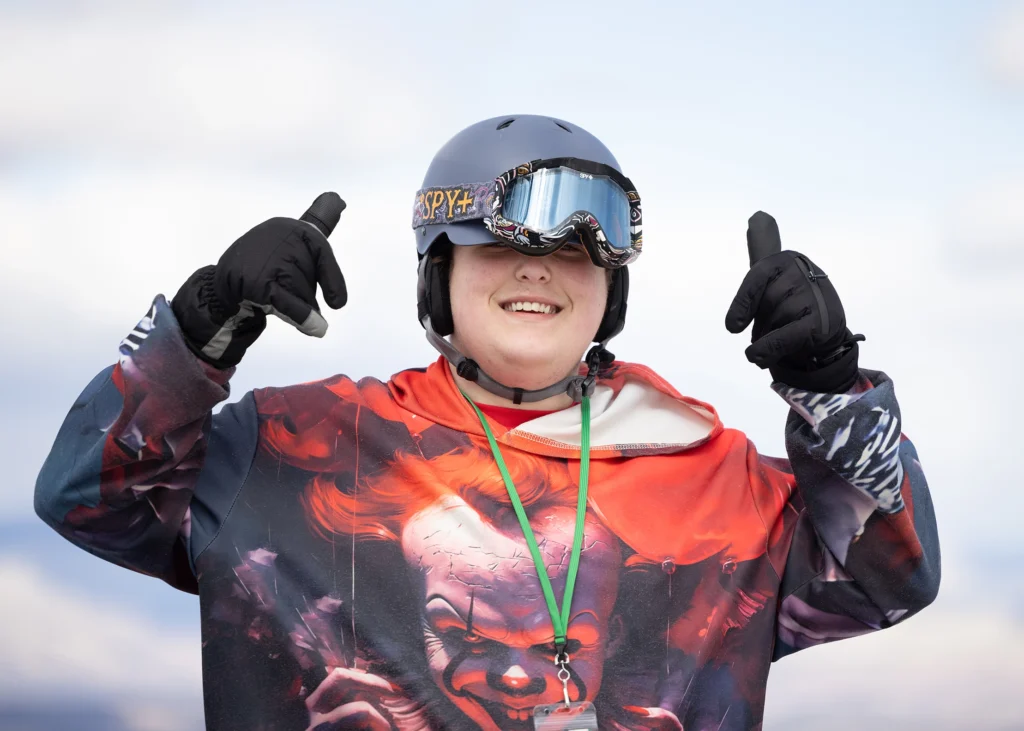
Colorado Discover Ability’s Adaptive Skiing and Snowboarding program provides individualized instruction for participants with a wide range of abilities. With specialized equipment, trained volunteers, and a flexible approach, the program is designed to help each participant build confidence, develop skills, and enjoy time on the mountain.
Participants are supported every step of the way, whether they are trying skiing or snowboarding for the first time or continuing to build on existing skills. Lessons are tailored in real time, allowing participants to try different equipment or approaches until they find what feels comfortable and fun.
Quick Facts
- Season: December through March
- Primary Days: Tuesday through Friday
(Private and group lessons) - Location: Powderhorn Mountain Resort (CDA office is located on the southwest side of the building)
- Typical Hours: 10:00 a.m. to 3:00 p.m.
- Age Eligibility: Ages 4 and up*
- Cost: $200 per lesson (full day)
- Includes: Lift ticket, adaptive equipment, and instruction
- Does not include: Lunch
- Sign-Up: By phone
Overview
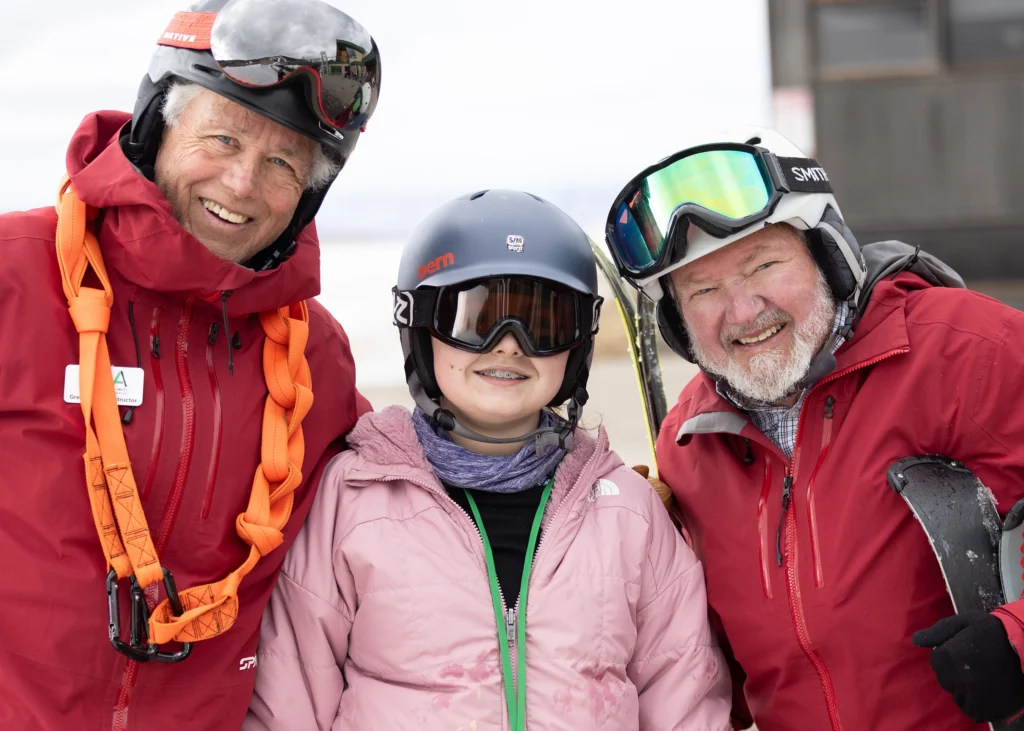
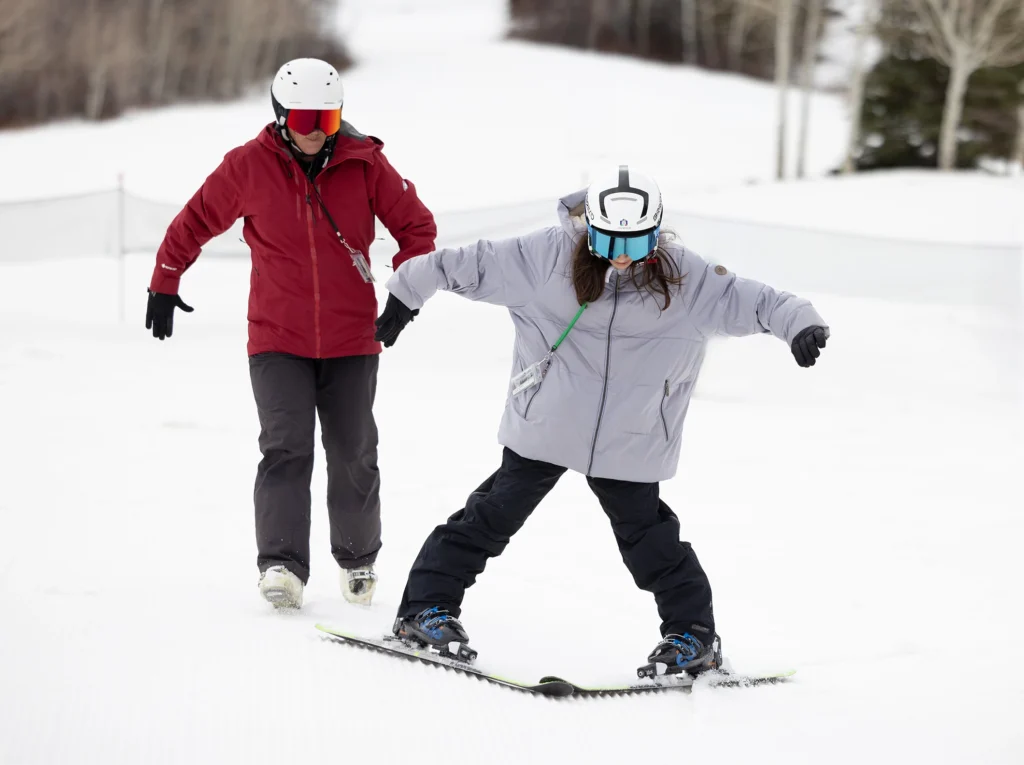
This program offers one-on-one adaptive skiing and snowboarding lessons designed to meet a wide range of needs. With a strong emphasis on flexibility, participants are encouraged to explore different approaches throughout the day.
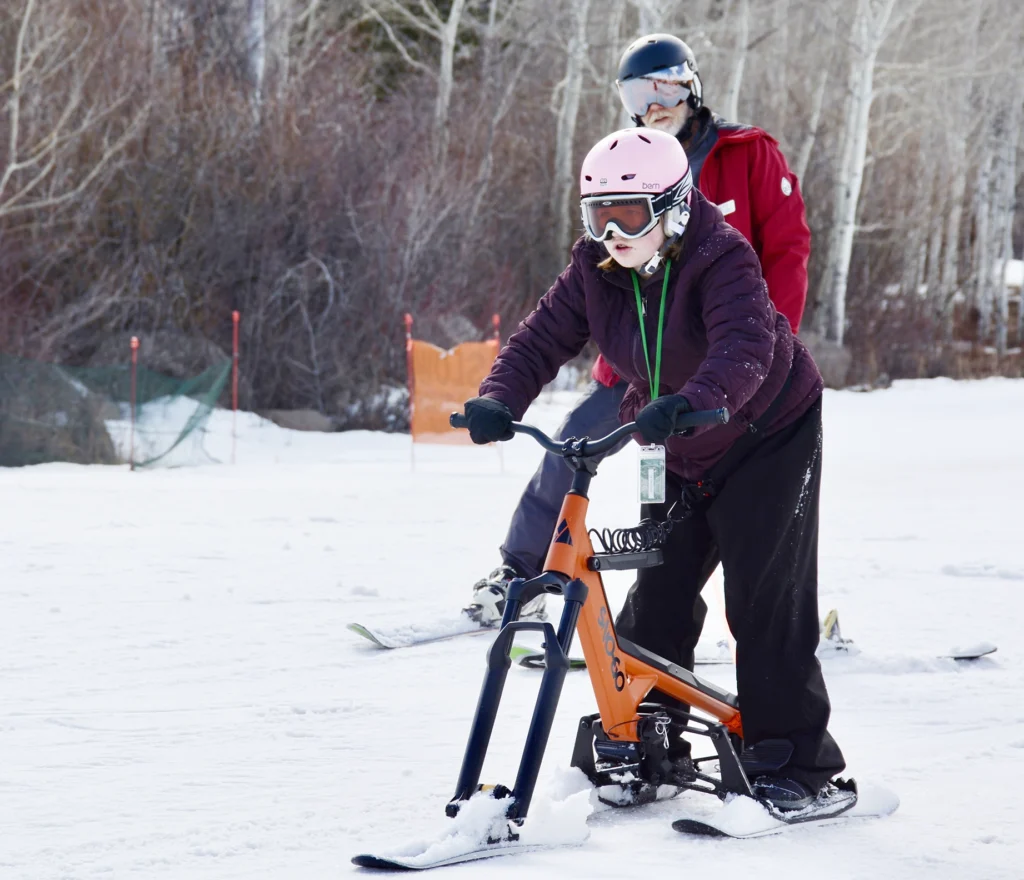
It’s common for participants to try one type of equipment and switch to another if it feels like a better fit. For example, someone who feels unsure on a snowboard may transition to a more stable option like a ski bike. The goal is always to find the right combination of equipment and support to create a safe, positive experience.
Lessons focus not only on skill development but also on independence, confidence, and enjoyment of the outdoors.
Who the Program Is For
- Adaptive Skiing and Snowboarding is designed for individuals with disabilities ages 4 and up.
- Open to individuals with a wide range of abilities.
The program is highly adaptable and includes support for participants with physical disabilities, developmental disabilities, and visual impairments. No prior skiing or snowboarding experience is required.
Schedule and Structure
Lessons typically run from 10:00 a.m. to 3:00 p.m. Participants are encouraged to arrive 30 minutes early to allow time for equipment setup and preparation before heading out on the mountain.
The day is structured around the participant’s needs and energy level. While there is usually a break for lunch, it is not formally scheduled. Please note that lunch breaks should be taken outside of the CDA office.
Participants may sign up for lessons throughout the season. Frequency depends on availability, demand, and volunteer support.
Weather and snow conditions are monitored closely. If conditions may affect a lesson, CDA staff will reach out in advance to discuss options or rescheduling.
Equipment and Support
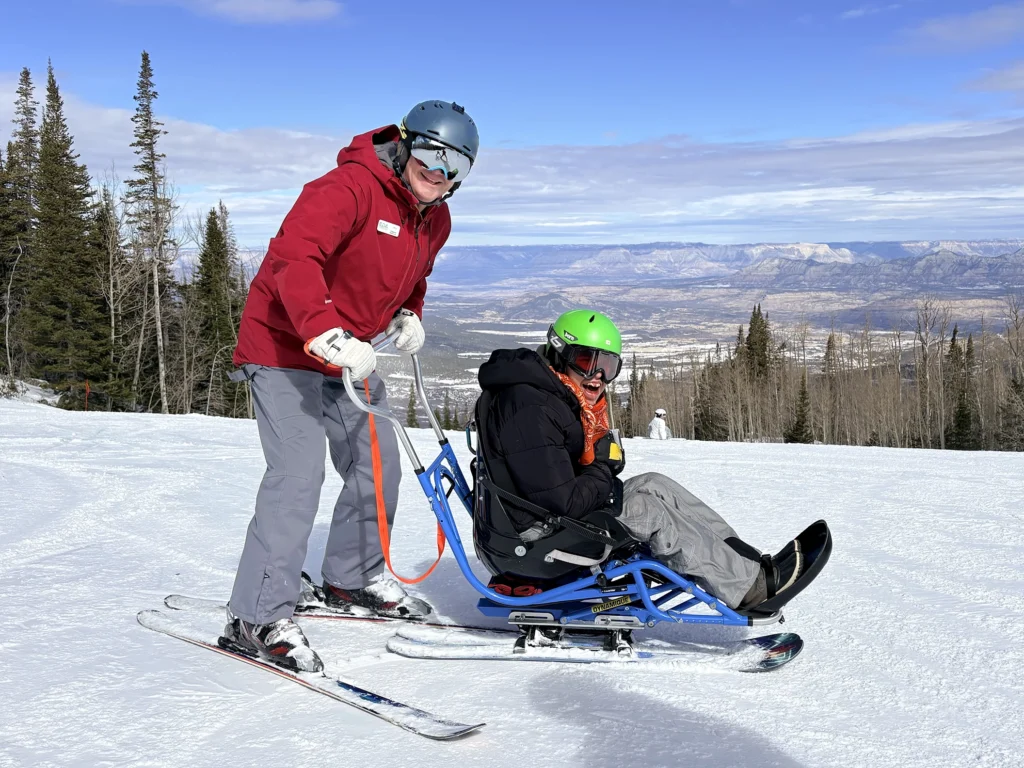
CDA provides a wide range of adaptive equipment to support different abilities, mobility levels, and comfort levels. Some participants ski or snowboard standing, while others use seated equipment or additional supports for balance and stability.
Equipment options may include:
- Skis and snowboards
- Sit-skis (bi-skis)
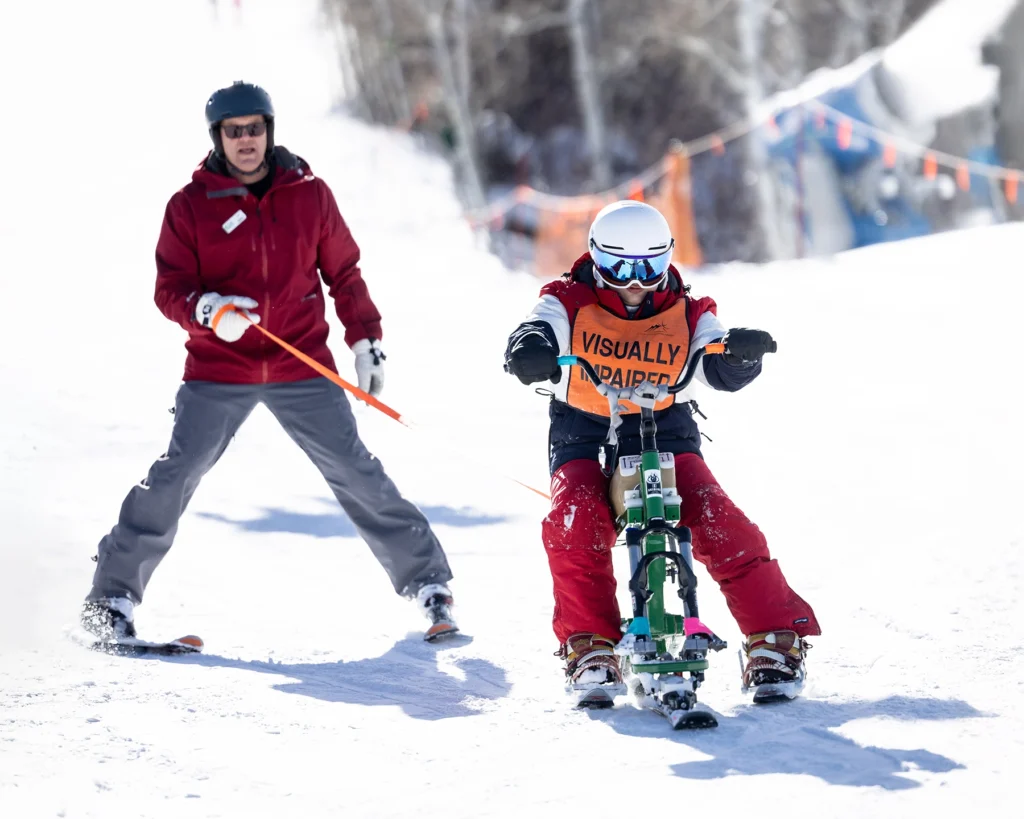
- Ski bikes and Sno-Gos
- Outriggers (adaptive poles with small skis attached for balance and support)
- Sliders (walker-style support devices)
Lessons are individualized based on each participant’s needs, comfort level, and goals. Participants may ski using a traditional two-ski approach or use outriggers and other adaptive supports. Depending on the setup, participants may use two-track, three-track, or four-track skiing techniques, which refer to the combination of skis and outriggers used for balance and mobility on the snow.
Some participants remain in the same setup throughout the season, while others may try different equipment or progress into new techniques over time. Equipment can also be adjusted during a lesson to help participants feel more comfortable and confident.
Each participant is supported by trained volunteers. In most cases, there are two volunteers per participant to assist with equipment, mobility, loading and unloading chairlifts, and on-mountain support.
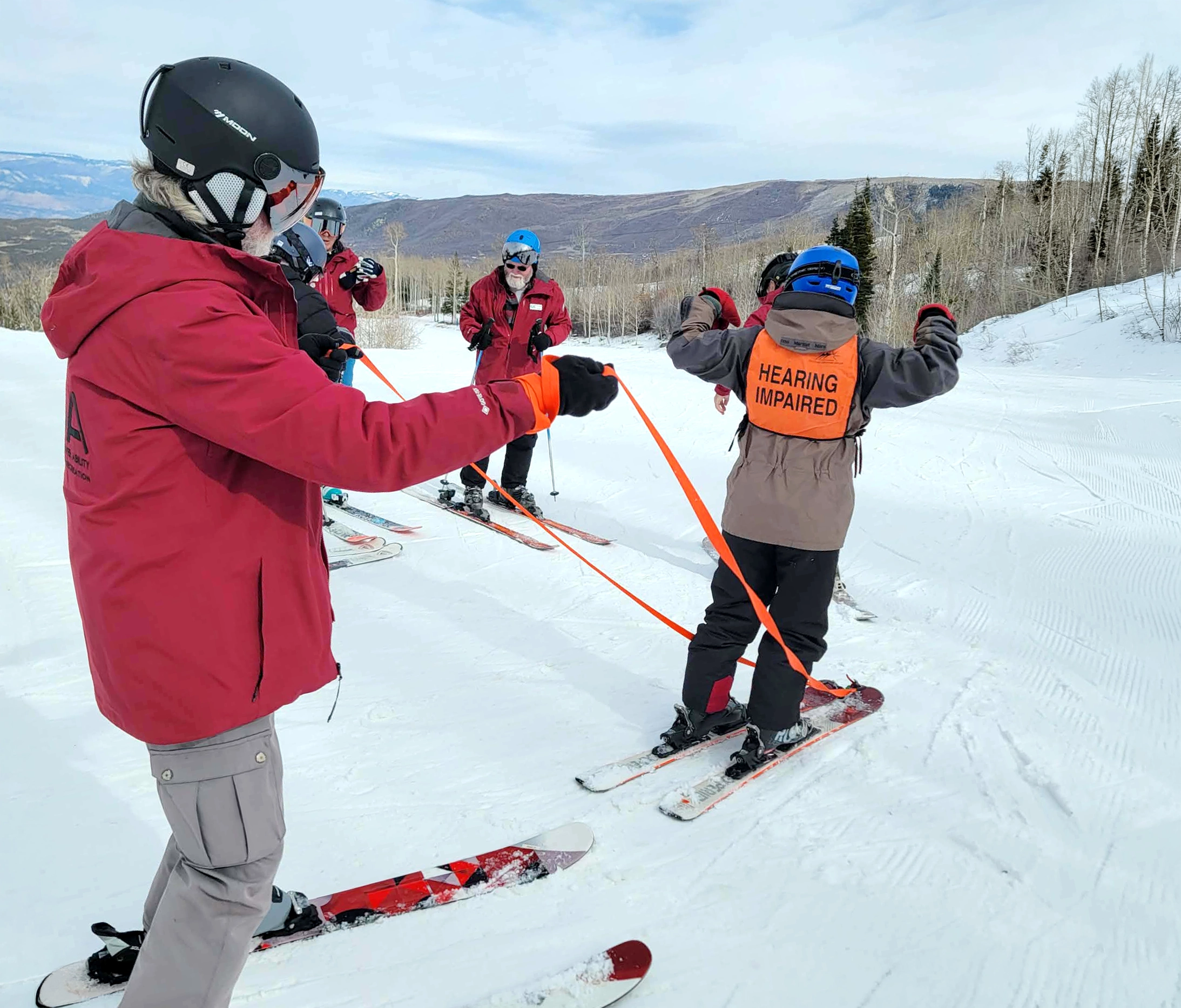
For participants with visual impairments, additional techniques such as tethering and verbal guidance are used to support safe navigation on the mountain.
Lessons are paced around the participant’s comfort and energy level, and breaks are encouraged as needed throughout the day.
All programming depends on volunteer availability, and CDA works to provide the best possible support for every session.
What to Bring
Participants should come prepared for winter conditions. This includes:
- Warm base layers
- Snow-appropriate outerwear
- Gloves, hat, and warm socks
- Sunscreen
- Lunch or money to purchase food at the resort
Optional items include:
- Personal ski or snowboard equipment
- Helmet (CDA helmets are available)
- Hand and foot warmers
A limited supply of jackets, snow pants, and gloves may be available if needed, though participants are encouraged to bring their own when possible.
Cost and Registration
Cost: $200 per Lesson
To register, participants or families should call or email the CDA office to schedule a lesson.
Participants may bring a friend or family member to join them. The person they wish to bring must be able to be independent on the snow and does not require support from CDA staff or volunteers
Payment is collected at the time of the lesson. If a session needs to be canceled due to weather or conditions, CDA will work with participants to reschedule when possible.